
Sourcing Guides
2026 Skiwear Sourcing Guide: Common Pitfalls for European and US Buyers
A practical framework for aligning performance claims, fit, construction details, testing and commercial requirements before a ski-jacket programme reaches sampling.

Start with the real end use
A ski jacket for resort use, a lightweight touring shell and an insulated children’s set may all be described as skiwear, but they create very different development briefs. Before comparing quotations, define the activity, weather range, target retail tier and expected garment lifetime. A supplier cannot make useful material or construction recommendations when the brief only says ‘waterproof ski jacket’.
The same principle applies to regional expectations. European and North American buyers may use different size blocks, care-label conventions and testing programmes. Confirm the intended sales markets at the beginning so that pattern development, labelling and documentation are not corrected after approval samples have already been made.
- Activity and climate range
- Shell, insulated or three-in-one construction
- Adult, youth or children’s fit block
- Target market and retail positioning
Do not buy a performance number without a test method
Waterproof and breathability figures are only meaningful when the test method, specimen condition and acceptance criteria are recorded. Two fabrics can carry similar marketing numbers while having different face fabrics, membranes, finishes and after-wash performance. Ask for the original report and match the reported method to the claim in your product brief.
Garment performance also depends on more than fabric. Seam construction, tape compatibility, zipper choice, hood coverage and pocket placement can all create weak points. Treat the fabric report as one input to a complete garment specification rather than as a guarantee for the finished jacket.
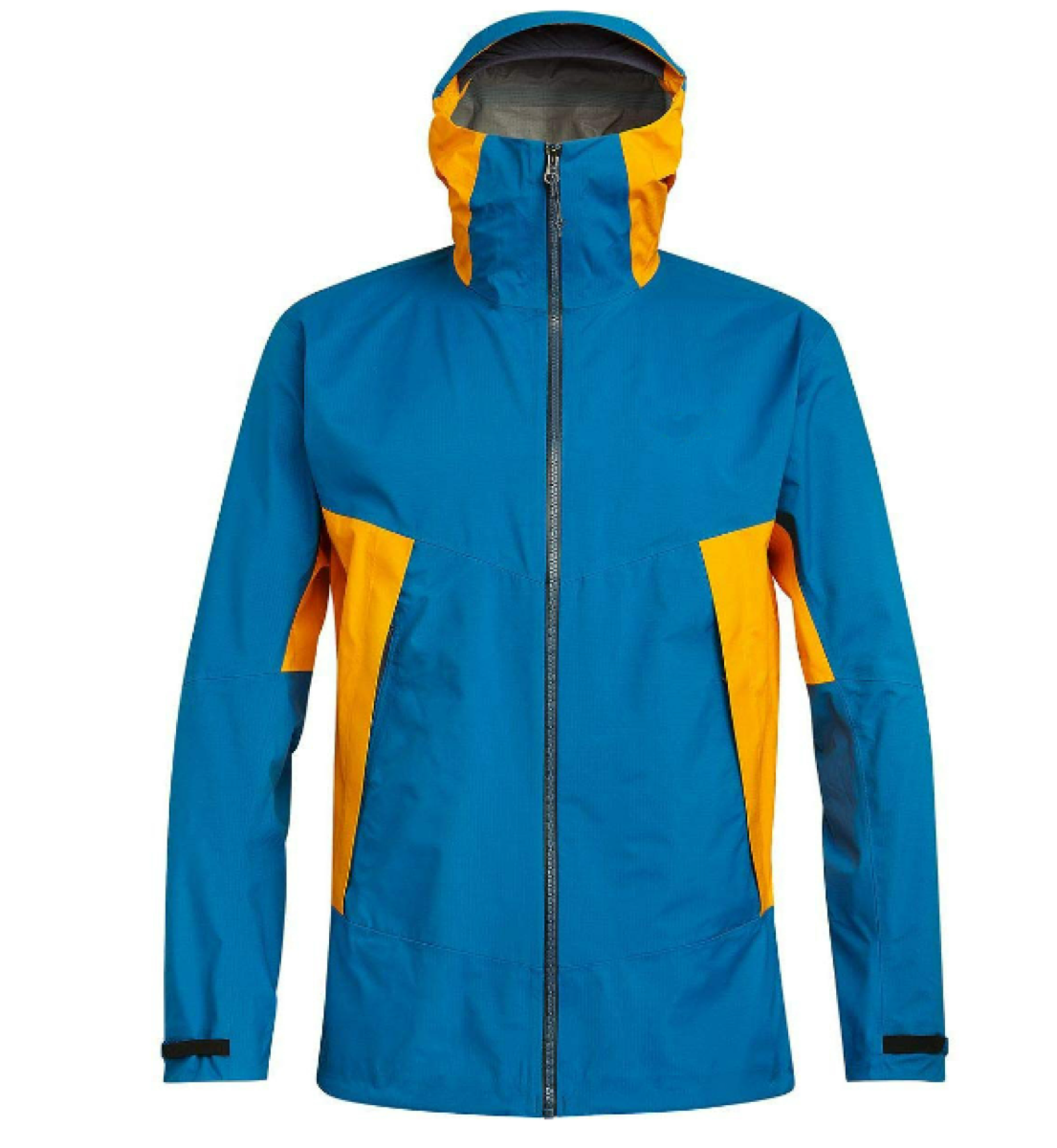
Control construction complexity before costing
Colour blocking, articulated sleeves, powder skirts, ventilation zippers and multiple bonded pockets can add value, but they also increase pattern pieces, operations and quality checkpoints. If a quotation is requested before these details are stable, later changes can move both price and lead time.
Separate must-have functions from optional features. This gives the factory a clear basis for costing and creates alternatives if the first specification exceeds the target price. It also prevents a visual reference garment from being interpreted as a complete technical specification.
Use samples to close decisions, not to discover the brief
A productive sample sequence starts with an agreed measurement chart, reference fit and construction notes. Review each sample against the same comments log, with photographs and responsibility for every open point. Repeated comments such as ‘improve fit’ or ‘make it more premium’ are difficult to action and often create unnecessary sample rounds.
For skiwear, check movement with the intended base layers and protective equipment. Hood rotation, sleeve reach, cuff coverage and hem position should be assessed in realistic postures rather than only on a standing mannequin.
Buyer checklist before placing an order
A dependable purchase order should reference the approved sample and the final technical pack, not an earlier quotation sheet. Close the points below before bulk material is released.
- Approved fabric, colour standard, trims and test reports
- Final graded measurements and tolerance table
- Seam-tape map and critical construction details
- Care labels, packaging, carton marks and destination requirements
- Inspection level, test plan and shipment approval process
Practical sourcing principle
The clearer the approval record, the easier it is for both buyer and factory teams to protect quality, timing and cost.